I hadn't planned to March for Australia, but my Canberra visit to lobby parliamentarians in late August coincided with the August 31 march. Having watched what was happening in the UK with huge numbers taking to the streets to protest mass immigration, I was curious to see how it would pan out here. It was interesting to see how many ordinary Australians would show up after our predictable mainstream media ran around like chickens with their heads off, claiming it would be overrun by Nazi bullies.
Well, there were none of them that day in sunny Canberra as many thousands of people strode peacefully over Commonwealth Bridge and up to Parliament House. All sorts, including plenty of families with kids, women of all ages. But strikingly, huge numbers of men. Ordinary blokes, many who'd travelled from rural areas outside Australia.
The chatty, friendly crowd shared similar stories. People forced to move out of the big cities because they can no longer afford housing. Older people whose adult kids simply can't find anywhere to rent. Frustrations with strains on infrastructure, health services, lengthening commute times, and concerns about community harmony.
Advertisement
But talking to many of the blokes it struck me that many of these problems are impacting most on the ordinary Aussie blokes who are already at the bottom of the pile. They have long been missing out on the perks and privileges being dished out to those rating higher on the DEI intersectionality ladder. It seems logical that it is men who are most likely to be kicked to the curb by the pressures being caused by the current high levels of immigration.
Mass immigration is a men's issue, US Secretary of State Marco Rubio pointed out in his 2024 essay, How Mass Migration Undermined Men, which traced the erosion of men's economic footing to a combination of deindustrialization, offshoring, and open borders policies, all exacerbating issues like job displacement, wage stagnation and barriers to family formation.
Obviously, the Australian situation is different but take a look at this interesting graph showing a huge bulge in the number of young men suddenly swelling our population, providing additional competition for jobs, housing, education, and for women.
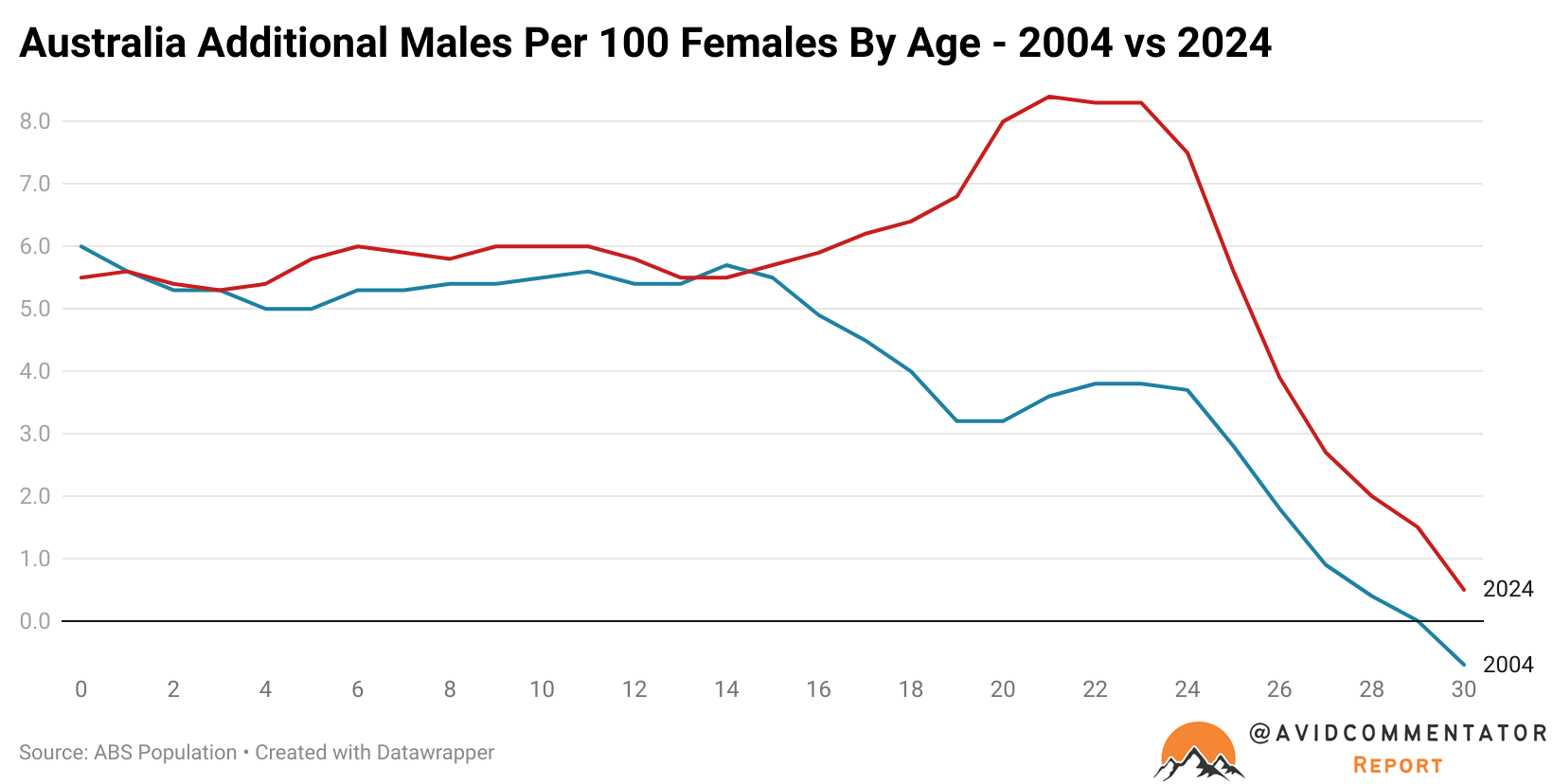
The graph is the work of journalist and analyst for News.com.au, Tarric Brooker, who says migration has to be the driving force for this change.
It's no wonder young men are having a particularly hard time finding jobs. Look at this graph posted online this week by Alex Joiner, chief economist at IFM Investors.
Advertisement
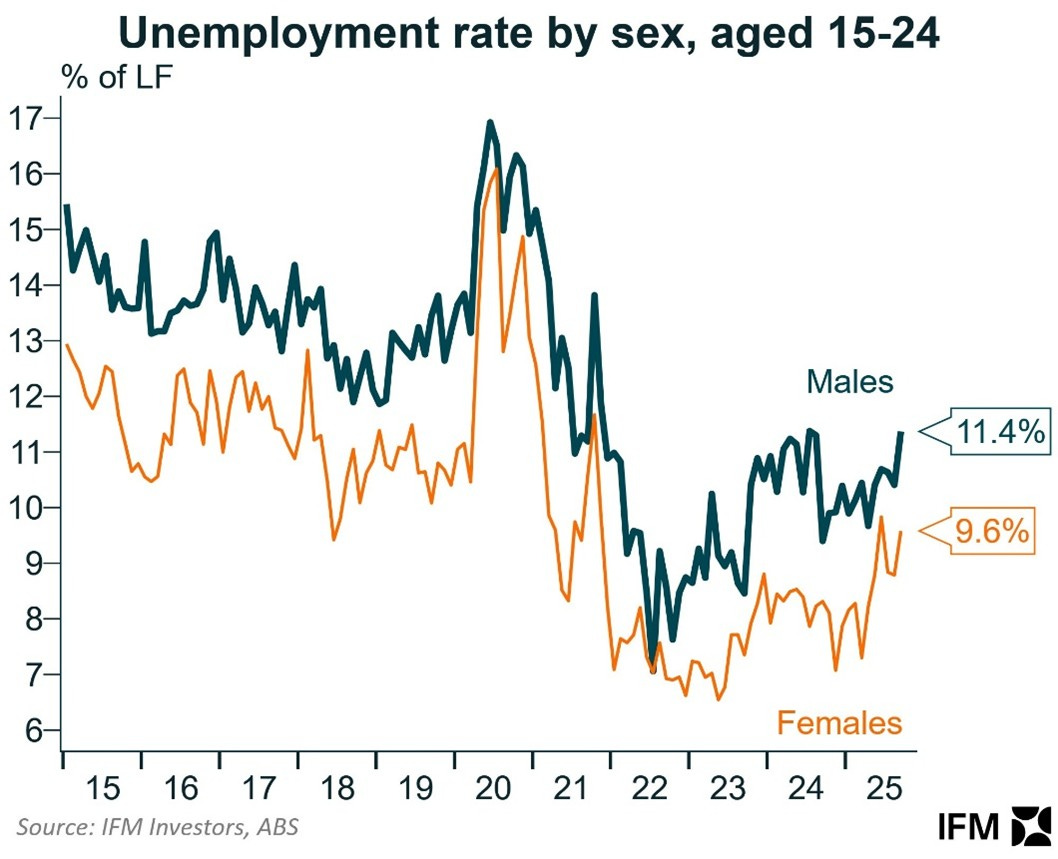
Many young people are struggling but, unsurprisingly, it is young men who are really up against it. (Male employment prospects aren't helped by the fact that so many boys are failing or dropping out from school, as I explained in my recent blog on the boys' education crisis. University attendance figures published earlier this month showed two of every three students starting university are now female – a fact that Education Minister Jason Clare was keen to bury, as Janet Albrechtsen pointed out in The Australian.)
Many will have seen the video of Morgan Cox, a young father on the brink of homelessness who fronted the ABC's Q&A panel in May this year and asked politicians about their plans to cut immigration and make housing more affordable for struggling Aussies.
Discuss in our Forums
See what other readers are saying about this article!
Click here to read & post comments.
9 posts so far.




 reddit this
 Del.icio.us
 Seed Newsvine
 StumbleUpon


