Such underlying analysis suggests that the broader economic impact could approach $1.5 trillion in trade and output effects.
The IMF and World Bank warn of stagflation risks:
- Global growth reduced by 0.5–1 percentage point,
- Inflation elevated,
- Financial volatility increased.
Advertisement
Regional implications:
- Asia: The most severely affected region. High dependence on Gulf energy means sharp increases in import bills, industrial slowdown, and macroeconomic stress. This could significantly dampen global growth.
- Europe: Faces renewed energy crisis dynamics, with high gas prices, industrial contraction risks, and increased fiscal burden from energy subsidies.
- Africa: Highly vulnerable. Many economies would face severe balance-of-payments pressures, inflation spikes, and social risks linked to energy and food costs.
- United States: More insulated in supply terms, but not immune: Benefits from high export prices, but faces inflationary pressure, tighter financial conditions, and global economic slowdown, which feeds back into U.S. growth.
For the GCC:
- Revenues may increase initially, but overall economic impact becomes more complex and potentially negative due to trade disruption, capital outflows, and infrastructure risk.
From a climate perspective:
- This scenario may accelerate long-term diversification, but in the short term, increases reliance on high-emission fuels, as security dominates policy priorities.
Advertisement
Conclusion
Across all three scenarios, one central conclusion emerges: we are no longer operating within a stable, globalized energy system-but within a fragmented, security-driven one.
This has several implications:
1. Energy security and energy transition are now inseparable-they must be addressed together.
This is a lightly edited version of a speech given by Adnam Shihab-Eldin in the GAFG Energy Series.
Discuss in our Forums
See what other readers are saying about this article!
Click here to read & post comments.
About the Author
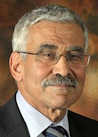
Adnan Shihab-Eldin is a former OPEC Secretary General. He is a
Kuwaiti physicist, energy economist, and academic. Currently a Senior
Visiting Research Fellow at the Oxford Institute for Energy Studies and a
founding board member of the Kearney Energy Transition Institute. He
also serves as the GAFG Steering Board Chair.




 reddit this
 Del.icio.us
 Seed Newsvine
 StumbleUpon